Your Dallas Commercial Roof Contractor for Flat Roof Repair, TPO Systems, and Storm Recovery
Hart Roofing & Construction
When a flat roof fails on a commercial building in DFW, it does not just create a maintenance problem. It disrupts operations, threatens inventory, and puts tenants or customers in a tough spot. This article covers what property managers and business owners in Dallas need to know about finding a reliable Dallas commercial roof contractor for flat roof repair, TPO systems, EPDM replacement, and storm recovery. Choosing the right Dallas commercial roof contractor from the start saves a lot of money down the road.
Dallas rooftops take real punishment. Spring hailstorms, summer heat that pushes surface temperatures past 170 degrees, and the occasional January ice event mean commercial flat roofs in this region age faster than almost anywhere else in the country. When you hire the wrong crew, it shows up fast. A true Dallas commercial roof contractor knows these conditions from experience.

Hart Roofing & Construction
Why Hiring a Specialized Dallas Commercial Roof Contractor Matters
Low-slope and flat roofs dominate commercial construction across the Dallas metro. Strip malls, warehouses, medical offices, and industrial buildings almost all rely on membrane roofing systems. These systems behave completely differently from residential shingles. A skilled Dallas commercial roof contractor understands membrane mechanics, drainage slope design, thermal movement, and how the DFW climate stresses those systems year-round.
TPO roofing DFW installations have become the go-to choice on most new commercial builds. Thermoplastic polyolefin is heat-welded at the seams, which makes it more watertight than older adhesive systems when installed correctly. EPDM is still common on older buildings and performs well with proper maintenance, but TPO has taken over a large portion of the market because it reflects heat rather than absorbing it. According to the U.S. Department of Energy, cool roofs can significantly reduce roof surface temperatures and lower building cooling loads, which matters a lot in a North Texas summer.
Standing water is the single most common issue on flat roofs in the Dallas area. When a roof does not drain within 48 hours after rain, the added weight breaks down the membrane from the outside while moisture works its way in at weak points. On older buildings, this usually comes from inadequate original slope design or from drains that have been buried under layers of prior repairs. A good Dallas commercial roof contractor will flag every drainage deficiency during the initial inspection.
Dallas summers regularly hit 100 degrees while winter nights can drop below freezing. That temperature swing constantly expands and contracts roofing membranes. If seams were not heat-welded during the right conditions or the installer used the wrong overlap width, separations open up within a few years. Any licensed Dallas commercial roof contractor worth hiring will check every linear foot of seam during an inspection, not just the obvious problem spots.
Spring storm season in DFW brings some of the most damaging hail in the country. Commercial roof replacement Texas calls spike every April and May because large hail bruises TPO, punctures EPDM, and destroys rooftop HVAC equipment. Property managers should always get a written inspection from a licensed flat roof repair Fort Worth or Dallas contractor before the insurance adjuster arrives. Documented evidence matters when claims get disputed.
Hart Roofing & Construction
Common Flat Roof Problems Across DFW Commercial Properties
Standing water is the single most common issue on flat roofs in the Dallas area. When a roof does not drain within 48 hours after rain, the added weight breaks down the membrane from the outside while moisture works its way in at weak points. On older buildings, this usually comes from inadequate original slope design or from drains that have been buried under layers of prior repairs. A good Dallas commercial roof contractor will flag every drainage deficiency during the initial inspection.
Dallas summers regularly hit 100 degrees while winter nights can drop below freezing. That temperature swing constantly expands and contracts roofing membranes. If seams were not heat-welded during the right conditions or the installer used the wrong overlap width, separations open up within a few years. Any licensed Dallas commercial roof contractor worth hiring will check every linear foot of seam during an inspection, not just the obvious problem spots.
Spring storm season in DFW brings some of the most damaging hail in the country. Commercial roof replacement Texas calls spike every April and May because large hail bruises TPO, punctures EPDM, and destroys rooftop HVAC equipment. Property managers should always get a written inspection from a licensed flat roof repair Fort Worth or Dallas contractor before the insurance adjuster arrives. Documented evidence matters when claims get disputed.
Hart Roofing & Construction
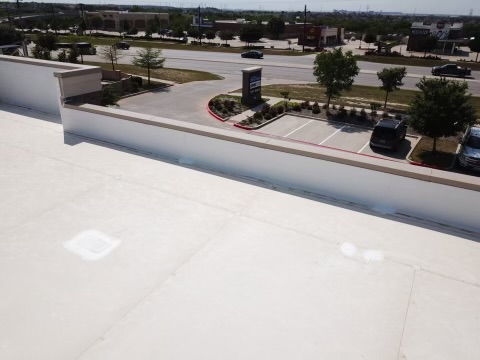
TPO vs. EPDM: Comparing the Two Most Common DFW Commercial Roof Systems
Here is a side-by-side look at how the two dominant flat roof membrane systems stack up for commercial buildings across Dallas and Fort Worth:
Factor | TPO Roofing | EPDM Roofing |
Heat Reflectivity | High (white membrane reflects sun) | Low (black membrane absorbs heat) |
Seam Method | Heat-welded, very strong | Adhesive or tape, can separate over time |
Typical Lifespan | 20 to 30 years with maintenance | 15 to 25 years |
Cost in DFW | Moderate to high | Moderate |
Storm Resistance | Good with proper installation | Good, stays flexible in cold snaps |
Best Use Case | New builds, hot climate priority | Re-roofing older buildings |
Hart Roofing & Construction
Maintenance Programs Every DFW Property Manager Should Have in Place
The majority of emergency repair calls we handle could have been avoided with a basic maintenance routine. A twice-yearly inspection, clean drains, documented seam checks, and fast response to standing water will extend the life of any commercial membrane roof by years. Any experienced Dallas commercial roof contractor should offer a maintenance program as part of their standard service.
Property managers overseeing multiple buildings need a local crew that already knows each property and can respond the same day a tenant reports a leak. The EPA has also documented how reflective membranes like white TPO help reduce the urban heat island effect in dense metro areas, which matters for building owners pursuing sustainability benchmarks or LEED certification.
What to Do After a Storm Hits Your Dallas Commercial Property
Storm response is where poor decisions cost property managers the most money. Here is what to do if your building takes a hit:
- Photograph and video the entire roof and any interior damage before cleanup starts
- Contact a licensed Dallas commercial roof contractor, not an out-of-state storm chaser
- Get a full written damage assessment before your insurance adjuster visits the site
- Inspect HVAC units, skylights, parapet caps, and penetrations, not just the membrane surface
- Keep all receipts for emergency supplies and temporary repair materials
Hart Construction serves commercial clients in Grapevine and Southlake in addition to Dallas proper. You can review our service coverage on the
Grapevine commercial roofing page and the Southlake commercial roofing page.
Hart Roofing & Construction
The Emergency Roof Repair Fort Worth Process: 5 Steps
When you call for emergency roof repair Fort Worth, professional contractors follow a systematic approach to protect your home and prepare for permanent repairs. Here’s what happens from initial contact through completion.
Step 1: Roof Inspection and Assessment
Before any work starts, a contractor walks the entire roof surface. They check the membrane condition, probe for soft spots that indicate wet insulation underneath, inspect every seam and penetration, and assess the drainage layout. On a commercial flat roof, this inspection also includes the parapet walls, flashing, and any rooftop equipment like HVAC units. Everything gets documented with photos before a single nail is pulled.
Step 3: Tear-Off and Deck Preparation
The existing membrane and insulation are removed down to the structural deck. The deck is inspected for rot, rust, or structural damage and any compromised sections are repaired or replaced before anything new goes down. This step is where shortcuts hurt the most. A new membrane installed over a damaged deck will fail early regardless of how good the material is.
Step 2: Scope and Material Selection
Once the inspection is complete, the contractor puts together a written scope of work. This is where the system choice happens, TPO, EPDM, modified bitumen, or a hybrid, based on the building type, budget, local climate, and how long the owner plans to hold the property. In DFW, TPO is the dominant choice on new work because of its heat reflectivity. The scope also covers insulation thickness, deck repairs, and drain modifications if needed.
Step 4: Insulation and Membrane Installation
New insulation boards are fastened to the deck, then the membrane is rolled out and secured. On a TPO system, seams are heat-welded using a hot-air welder, which fuses the overlapping edges into a single continuous piece. Flashings are installed around every penetration, drain, and wall edge. This is the most labor-intensive part of the job and the quality of the seam work here determines how long the roof performs.
Step 5: Final Inspection and Documentation
Once installation is complete, the contractor does a full walkthrough with the property owner or manager. Seams are checked, drains are tested, flashings are confirmed, and the roof is photographed in its finished state. A warranty document is issued covering both materials and workmanship. That final documentation package is important for insurance purposes and for any future contractor who works on the building.
Hart Roofing & Construction
Choosing the Right System for Your Texas Commercial Building
No two buildings are the same. A distribution warehouse in south Dallas has different drainage requirements than a two-story medical office in Plano. When a Dallas commercial roof contractor walks a property before bidding, they should be assessing the deck substrate, existing insulation thickness, drainage outlet positions, and the owner’s plans for the building over the next ten to fifteen years. The right Dallas commercial roof contractor brings that full picture to every bid.
We have put together a detailed guide to commercial roofing materials on our website if you want to compare your options before making a call.
Why Hart Construction Is the Right Dallas Commercial Roof Contractor for Your Next Project
A flat commercial roof is one of the most important long-term investments in any commercial property. Whether you are dealing with storm damage in Grapevine, managing a multi-tenant building in Fort Worth, or planning a full commercial roof replacement Texas project in Dallas, the difference between a 15-year roof and a 30-year roof usually comes down to who installs it and whether they keep up with it afterward. Hart Construction is the Dallas commercial roof contractor DFW property managers call when the job has to be done right. Reach out today to schedule a no-obligation roof assessment.
Hart Roofing & Construction
Frequently Asked Questions
Most projects take two to five days depending on roof size and the system being installed. TPO roofing DFW installs tend to move quickly because the membrane comes in wide rolls and the heat-welding process is efficient. Weather delays happen in spring, but a reliable Dallas commercial roof contractor will give you a realistic schedule before the crew sets foot on the building.
For most new builds in the DFW area, TPO is the stronger option because of its heat reflectivity in the Texas climate. EPDM still makes sense for re-roofing older buildings where budget is tight. The right answer depends on the specific building, so ask your contractor to assess the existing deck and drainage before recommending a system.
It depends on the extent of the damage. Minor punctures and localized bruising can often be patched. If the membrane is heavily compromised or the insulation underneath has been saturated by water intrusion, commercial roof replacement Texas will likely cost less over time than repeated patching. Get an honest assessment from a licensed contractor before deciding.
Look for a licensed, insured contractor with documented experience on low-slope commercial membrane systems. Ask for references from similar-sized buildings in the DFW area and make sure they have a clear storm damage documentation process. Hart Construction has worked across the Metroplex and can provide project references on request.
Hart Roofing & Construction
Conclusion
Flat roofs on commercial buildings do not manage themselves. Between the DFW heat, spring hail, and the thermal stress that comes with Texas temperature swings, even a well-installed membrane needs attention to reach its full lifespan. Whether you are scheduling your first inspection, dealing with storm damage, or planning a full replacement, working with a trusted Dallas commercial roof contractor from the start is the decision that protects everything underneath that roof. Hart Construction is ready when you are. Call us today to set up a no-obligation assessment.